MBA in the UK for Indian Students: Fees, GMAT, and What It Pays Back
Most UK MBAs run a single intensive year, not two — but not all of them, and the exceptions change both the cost math and the visa timeline. Here's what the top programs actually cost, actually require, and actually pay once you're through them.
By Mandeep Aulakh · Published 2 September 2026
One year, mostly — and where that isn't true
The single biggest structural difference between a typical UK MBA and its US counterpart is duration: Cambridge Judge, Oxford Saïd, Imperial, and Warwick all run a single intensive year against the standard two-year US format. That compresses both the cost and the opportunity cost — one year of tuition and living expenses instead of two, at the expense of a shorter internship-and-networking window that two-year US programs use to convert into full-time offers.
Two of the best-known names don't fit that pattern, though. London Business School runs a flexible 15-21 month format with multiple exit points rather than a fixed one-year track, and Manchester's MBA runs 15-18 months by default, though it can be compressed to 12. Check a specific program's actual length before assuming every UK MBA is a strict one-year commitment — the format varies more than the country-level generalisation suggests.
What the leading programs actually cost, and how long they take
Fees vary by more than double between the most expensive name and the most affordable one, and the gap isn't purely about ranking — programme length, cohort size, and campus location all factor in. London Business School's higher fee partly reflects its longer, flexible-length format rather than being a straight like-for-like comparison with the five one-year programs below it.
| School | Ranking | Fee | Duration |
|---|---|---|---|
| London Business School | FT Global MBA #4 (joint); QS Global MBA #6 | £123,950 | 15-21 months (flexible) |
| Oxford Saïd | QS Global MBA #12 (joint) | £88,800 | 1 year |
| Cambridge Judge | QS Global MBA #7 | £80,000 | 1 year |
| Imperial College Business School | QS Global MBA #19 | £78,000 | 1 year |
| Warwick Business School | Triple-accredited (AACSB/EQUIS/AMBA) | £59,500 | 1 year |
| Manchester (Alliance MBS) | Triple-accredited | ~£50,000 (2025 entry: £49,000; 2026 fee not yet officially confirmed) | 15-18 months, compressible to 12 |
UK MBA programs by ranking, fee, and duration, 2026 entry
GMAT, work experience, and who actually gets in
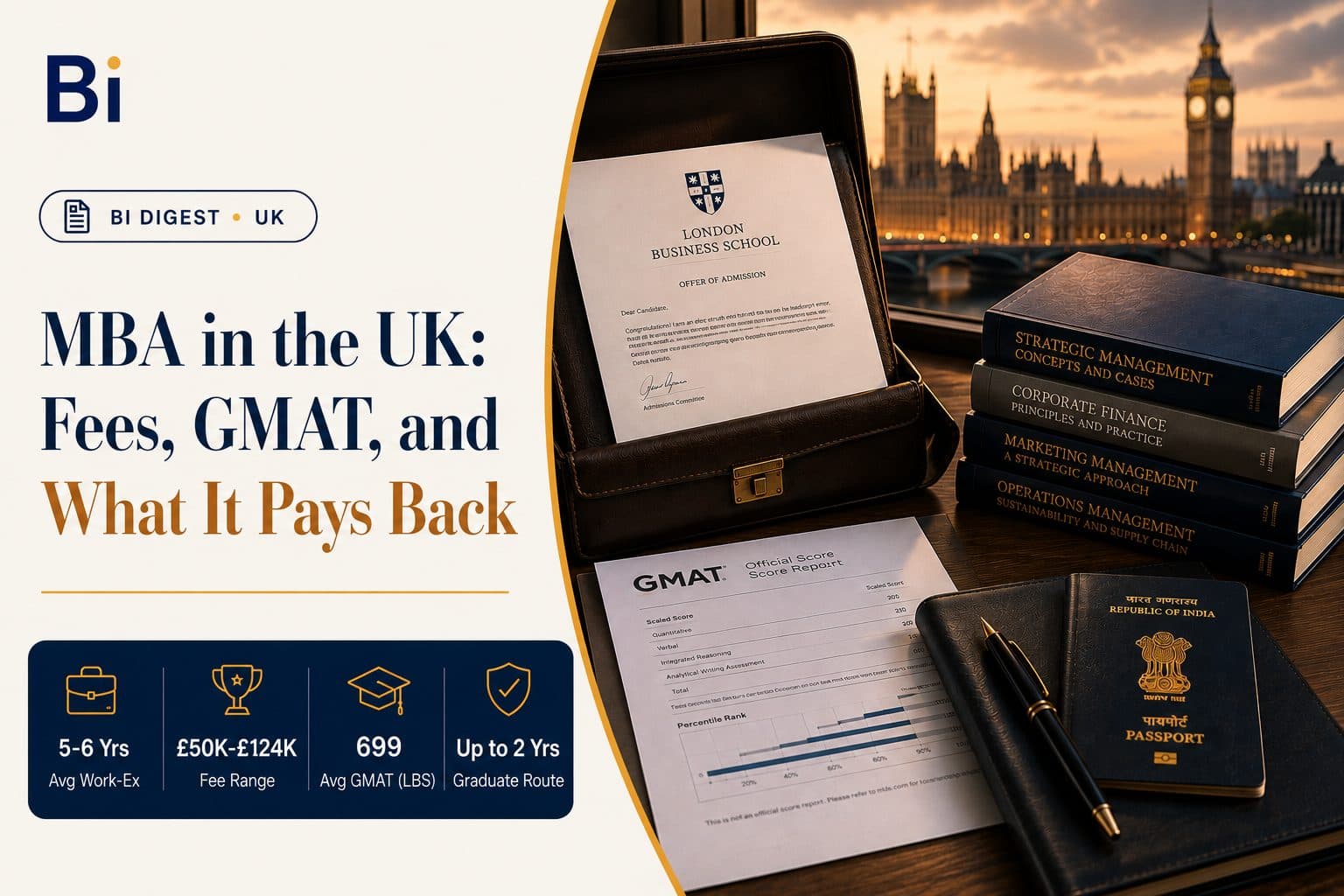
Every program on this list sets a real work-experience bar, but the way schools state it differs: some publish a hard minimum, others publish a class average with no stated floor. Imperial, Warwick, and Manchester all set a minimum of 3 years of post-graduation work experience, though Imperial's actual incoming class averages 6. London Business School, Cambridge Judge, and Oxford Saïd don't publish a hard minimum, but their most recent classes averaged 5, 6, and 6 years respectively.
GMAT expectations cluster tighter than fees do. London Business School's most recent class averaged 699, Cambridge Judge 697, Imperial 666 (against a stated minimum of 600), and Oxford Saïd a median of 680. Warwick states a target of roughly 660. Manchester requires the GMAT or GRE but hasn't published a specific class average.
GMAT itself is more negotiable at several UK schools than applicants often assume, particularly for candidates with a strong enough professional profile or a quantitative undergraduate degree — Imperial, for instance, explicitly states it will consider candidates below its usual work-experience threshold given strong academic performance and career progression. Always check a specific program's current waiver or flexibility policy directly rather than assuming eligibility; it varies by school and by year.
What it pays back
London Business School's Class of 2025 employment report put the mean base salary at $123,373, with 83% of graduates who accepted an offer also receiving additional compensation such as a signing or performance bonus, and the cohort's mean base salary up roughly a third from pre-MBA earnings. Manchester reports 86% of its graduates accepting a job offer within three months of finishing, into consulting, finance, and technology roles.
Exact salary figures vary considerably by school, industry, and location of the first job after graduation, so treat any single average as directional rather than a personal guarantee — the honest comparison is the salary uplift relative to what you were earning before the MBA, not the headline number a school's marketing leads with.
The visa timeline a one-year program changes
For the five programs here that genuinely run a single year, you reach the Graduate Route post-study work visa a full year sooner than a two-year program elsewhere would put you, and sooner than a two-year UK master's would too. The Graduate Route itself runs 2 years for anyone whose course starts by 31 December 2026, dropping to 18 months for courses starting from 1 January 2027 onward — so a specific cohort's start date, not just the program's length, determines which window you actually get. Most UK MBAs run a single September intake, which for 2026-27 entry falls before the cutoff and still qualifies for the full 2-year Graduate Route.
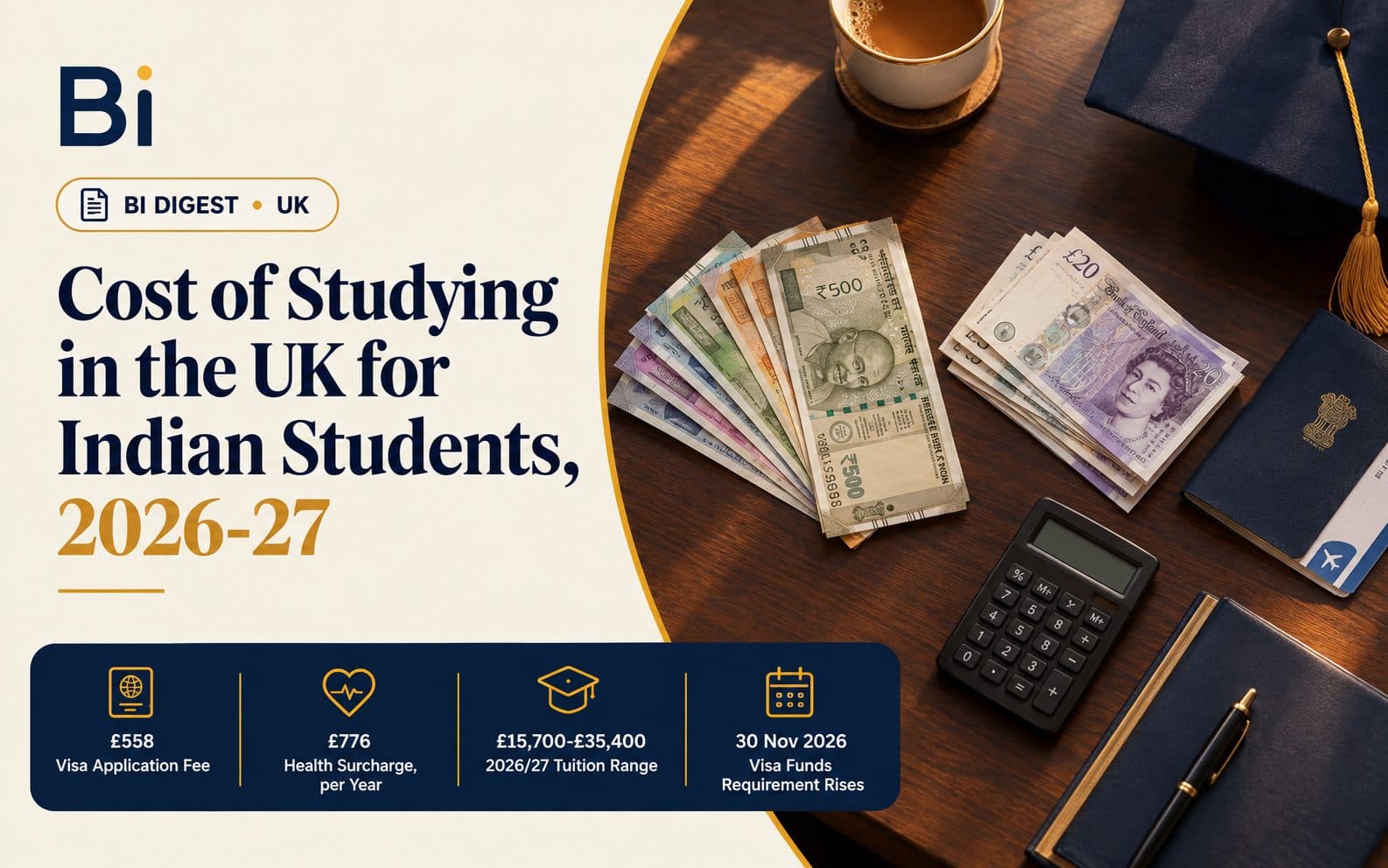
Budget the same visa-cost stack that applies to any UK Student visa on top of tuition: the £558 application fee and roughly £776 a year in the Immigration Health Surcharge — which, for a 15-21 month LBS programme, works out to a larger total IHS bill than a one-year program at another school, on top of whatever deposit your specific business school requires ahead of enrolment.
The honest bottom line
A UK MBA makes the clearest financial sense for an applicant with real work experience already behind them, targeting a genuine career pivot or acceleration rather than a first professional credential — the one-year format that most of these programs share simply doesn't give you the same slow-build internship-to-offer runway a two-year US program does, so it rewards candidates who already know roughly where they're headed. Fee alone shouldn't decide the shortlist: a roughly £50,000 Manchester MBA and a £123,950 London Business School MBA both lead to a UK MBA qualification and Graduate Route eligibility, but they don't lead to the same recruiter conversations in every industry, run different lengths, and the gap is worth weighing against your specific target sector before defaulting to the most expensive name on the list.
Frequently Asked Questions
How much does an MBA cost in the UK?
Roughly £50,000 to £124,000 depending on the school and program length. Manchester (~£50,000) and Warwick (£59,500) sit at the more affordable end, Imperial and Cambridge Judge in the £78,000-£80,000 range, Oxford Saïd at £88,800, and London Business School tops the list at £123,950 — though LBS's fee also covers a longer 15-21 month program rather than the one-year format most others use.
Is a UK MBA one year or two?
One year at most UK business schools — Oxford Saïd, Cambridge Judge, Imperial, and Warwick all run a strict single year, well under the standard two-year US format. London Business School and Manchester are the exceptions: LBS runs a flexible 15-21 months, and Manchester runs 15-18 months by default (compressible to 12). Check a specific school's actual length rather than assuming every UK MBA is exactly one year.
Do I need the GMAT for a UK MBA?
Yes at most schools, though requirements are more flexible than applicants often assume. Recent class averages run from about 666 (Imperial) to 699 (London Business School), with Warwick targeting around 660. Manchester requires the GMAT or GRE without publishing a specific average. Several schools will consider strong candidates outside their usual profile, so check each program's current flexibility directly.
How much work experience do I need for a UK MBA?
Imperial, Warwick, and Manchester all set a published minimum of 3 years. London Business School, Cambridge Judge, and Oxford Saïd don't state a hard floor, but their most recent classes averaged 5, 6, and 6 years respectively — so in practice, most successful applicants across every school on this list carry several years of real experience, not a fresh undergraduate degree.
What's the average salary after an MBA in the UK?
It varies significantly by school and industry, so treat any single figure as directional. London Business School's Class of 2025 reported a mean base salary of $123,373, roughly a third higher than the same cohort's pre-MBA earnings, with the large majority also receiving a signing or performance bonus on top.
Sources
London Business School: FT Global MBA #4 (joint), QS Global MBA #6, official 2026 tuition fee £123,950, 15-21 month flexible programme length
London Business School, official fees & financing page and FT ranking news ↗London Business School average GMAT 699, average work experience 5 years (range 2-13)
London Business School, official MBA FAQs / class factsheet ↗London Business School Class of 2025 employment report: mean base salary $123,373, ~33% average increase over pre-MBA salary, 83% received additional compensation
Clear Admit, LBS MBA Class of 2025 Employment Report ↗Cambridge Judge MBA: official 2026-27 fee £80,000, QS Global MBA #7, average GMAT 697, average work experience 6 years, one-year duration
Cambridge Judge Business School, official fees and funding page ↗Oxford Saïd MBA: official 2026-27 fee £88,800, QS Global MBA #12 (joint), median GMAT 680, average work experience 6 years, one-year duration
Saïd Business School, University of Oxford, official programme fees ↗Imperial College Business School MBA: official 2026 fee £78,000, QS Global MBA #19, minimum 3 years work experience (average 6), average GMAT 666 (minimum 600), one-year duration
Imperial College Business School, official Full-Time MBA admissions page ↗Warwick Business School MBA: official 2026-27 fee £59,500, minimum 3 years work experience, GMAT target ~660, one-year duration
Warwick Business School, official Full-Time MBA fees and entry requirements ↗Alliance Manchester Business School MBA: 2025 entry fee £49,000 (2026 not yet officially confirmed, estimated ~£50,000), minimum 3 years work experience, 15-18 month duration compressible to 12, 86% of graduates accept an offer within 3 months
Alliance Manchester Business School, official MBA fees and funding page ↗UK Graduate Route: 2 years for courses starting by 31 December 2026, 18 months from 1 January 2027; UK Student visa fee £558 and IHS £776/year
GOV.UK, Graduate visa and Student visa ↗Figures and rules change; always confirm against the official source for your application date.
Have a question this didn't answer?
Every situation is different. Talk to a counsellor for advice specific to your profile, budget, and timeline.