The UK Graduate Route Drops to 18 Months in 2027. Here's What Actually Changes

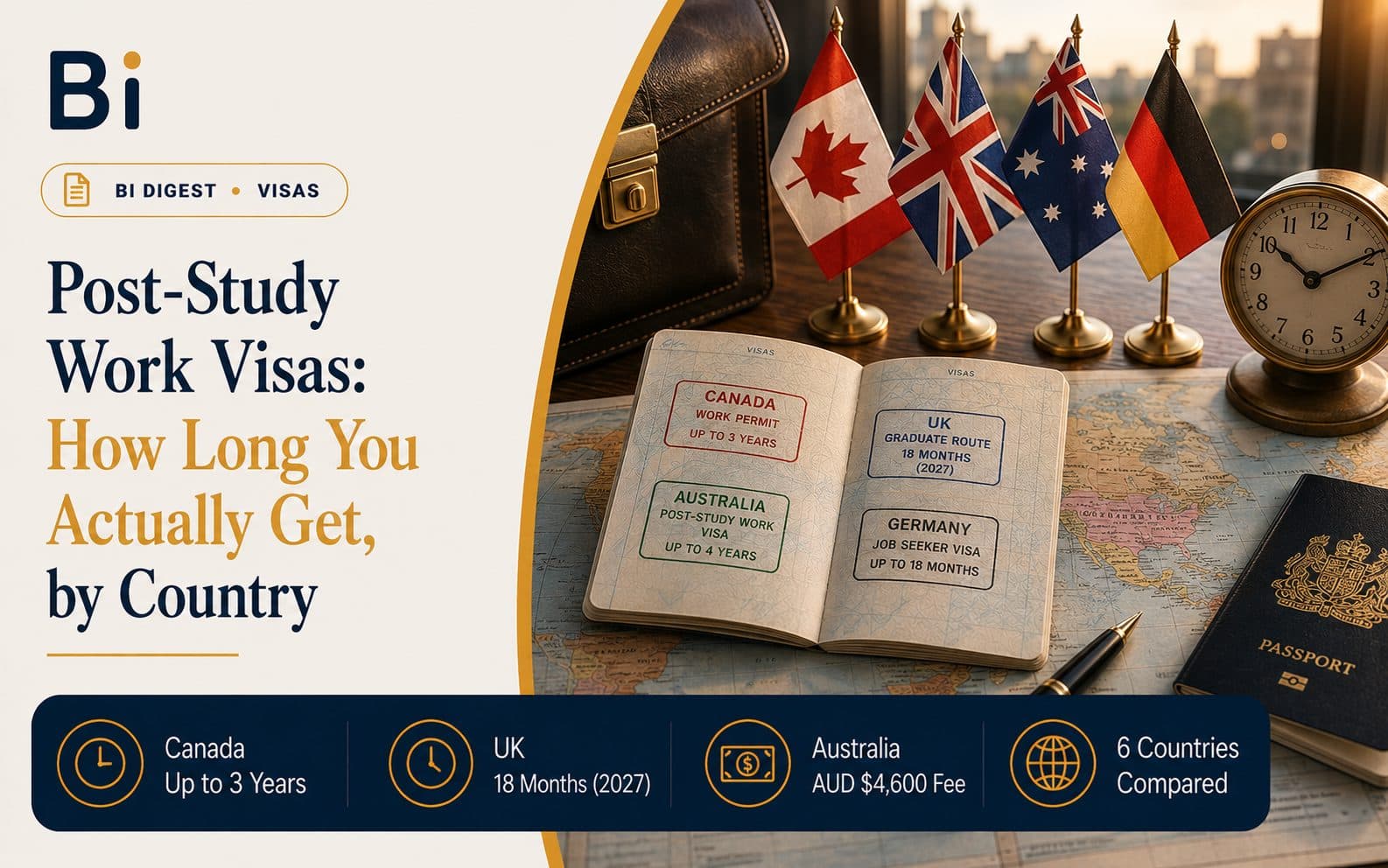
The UK Graduate Route shrinks from 2 years to 18 months, and what actually decides which one you get is whether you complete your course in time to apply on or before 31 December 2026 — not your course start date, and not how quickly you submit your application afterward.
By Mandeep Aulakh · Published 18 August 2026
What's locked in, legally
The Graduate Route reduction was first proposed in the UK government's May 2025 Immigration White Paper, and formally confirmed via a Statement of Changes to the Immigration Rules published 14 October 2025 — this is the difference between a policy idea and an enacted rule, and it's firmly the latter now. For Graduate Route applications made on or after 1 January 2027, undergraduate and master's graduates receive 18 months of permission instead of 2 years. PhD and other doctoral graduates are entirely unaffected and continue to receive the full 3 years, regardless of when they apply.
The detail everyone gets wrong: your graduation timing is what actually locks you in
This is worth stating very precisely, because it's the single most common misunderstanding, and the wrong version of it can genuinely cost a student six months of work rights. Do not read "it's the application date that matters" as meaning you have flexibility to delay your application while still finishing on time. You can only submit a Graduate Route application once your university has confirmed your course completion to UKVI — you cannot apply in advance of finishing your course, and you cannot apply while still on your Student visa awaiting results. That means your completion date is effectively what determines your earliest possible application date, which is what actually decides which visa length you get.
Put plainly: students who complete their studies and are able to apply for the Graduate Route on or before 31 December 2026 get the full 2 years. Students who don't complete their studies until after 31 December 2026 have no way to apply before that date — their course simply isn't finished yet, and UKVI won't have received confirmation — so they will apply in 2027 and receive 18 months, regardless of when their course started or how efficiently they moved through it. As one industry analyst put it, this means most current undergraduates and two-year master's students on course right now will be affected, since their completion dates land after the cutoff by the nature of their programme length, not through any delay on their part.
The practical implication for anyone finishing around the turn of the year: once your university confirms your course completion, submit your Graduate Route application immediately — there's no reason to wait, and no benefit to it. But the real lever here isn't application speed, it's whether your programme's completion date lands before or after 31 December 2026 in the first place. A one-year master's starting September 2026 that finishes on schedule in autumn 2027 will complete well after the cutoff and fall into the 18-month bracket regardless of how promptly the student applies afterward.
What it costs, and how the reduced length changes the maths
The Graduate visa application fee is currently around £880–£937 (fee levels are periodically adjusted; confirm the live figure on GOV.UK before applying), plus the Immigration Health Surcharge, which runs roughly £1,035 per year of visa granted. For the current 2-year grant, that's roughly £2,070 in IHS alone; for the reduced 18-month grant from January 2027, the IHS drops proportionally to roughly £1,552 — a smaller total outlay, but for six fewer months of work rights, which is a worse trade for almost every graduate's actual goals.
What the Graduate Route does and doesn't buy you
No job offer, no sponsor, and no minimum salary are required to hold the Graduate Route — it's genuinely open work authorization at any skill level, which is what makes it valuable as a bridge. But it is explicitly a bridge, not a destination: time spent on the Graduate Route does not count toward Indefinite Leave to Remain at all. To convert UK work experience into long-term settlement, you need to switch onto a route like the Skilled Worker visa — which requires a licensed sponsor and clearing a salary threshold — before your Graduate Route time runs out. The Graduate Route also cannot be extended under any circumstances; once it expires, you either have a qualifying route to switch into, or you leave.
This is exactly why the reduction to 18 months matters beyond the headline number. Six fewer months to find a sponsoring employer and clear a salary bar is a materially tighter window, particularly for graduates in fields where entry-level roles don't always meet the Skilled Worker salary threshold on day one.
What this means for planning a UK degree right now
If you're choosing a course start date with any flexibility, the maths now genuinely favours a programme that will complete in time to apply before the cutoff, where that's realistic — a one-year master's starting September 2026 finishes around autumn 2027, which is already past 31 December 2026, so even a one-year programme starting this academic year will land in the 18-month bracket. The window for a student to still realistically secure the full 2 years is narrowing fast: it now depends on programmes that will genuinely complete before the end of 2026. This isn't a reason to avoid longer UK programmes, but it is a reason to factor the shortened post-study window into the same cost-benefit calculation as tuition and living costs, rather than treating post-study work rights as a fixed constant the way older Germany, Ireland, or UK comparisons often did.
Frequently Asked Questions
Is the UK Graduate Route definitely being reduced to 18 months?
Yes — this was confirmed in law via a Statement of Changes to the Immigration Rules published 14 October 2025, not just proposed. It applies to Graduate Route applications made on or after 1 January 2027.
Does my graduation date or my application date decide my Graduate Route length?
In practice, your completion date is what matters, because you can only apply for the Graduate Route once your university confirms your course is finished — you can't apply in advance. If your course completes in time for you to apply on or before 31 December 2026, you get 2 years. If your course finishes after that date, you have no way to apply earlier, and you'll receive 18 months regardless of when you started.
Are PhD graduates affected by the Graduate Route change?
No — PhD and other doctoral graduates continue to receive the full 3-year Graduate Route regardless of when they apply.
Does time on the Graduate Route count toward UK settlement?
No. The Graduate Route does not count toward Indefinite Leave to Remain. You need to switch to a route like the Skilled Worker visa, which requires a sponsor and a salary threshold, before your Graduate Route expires, for settlement time to start accumulating.
Sources
Statement of Changes published 14 October 2025; 18 months from 1 Jan 2027; PhD unaffected (3 years)
UKCISA, official student advice body ↗Statement of Changes published 14 October 2025; 18 months from 1 Jan 2027; PhD unaffected (3 years)
DavidsonMorris, immigration law firm ↗You can only apply for the Graduate Route once your university confirms course completion to UKVI
University of Leeds, Graduate visa guidance ↗Most current students affected due to completion timing
ICEF Monitor ↗Fee (£880–£937) and IHS (£1,035/year; ~£1,552 for 18 months)
Loughborough University, International Student Support ↗Figures and rules change; always confirm against the official source for your application date.
Have a question this didn't answer?
Every situation is different. Talk to a counsellor for advice specific to your profile, budget, and timeline.