

Thinking about higher studies abroad? Many students dream to study masters in USA because of the top universities, better career chances, and global exposure.
But the big question is: how to study masters in USA without confusion? From picking the right course to handling applications and visas, the process may seem tough at first.
This blog will make it simple for you. By reading till the end, you’ll get clear steps, useful tips, and the confidence to start your journey toward a master’s degree in the USA.
Why study Master’s in the USA?
Here are some of the reasons to study a master’s in USA in 2026:
- The World’s Best Universities: The USA has many of the world’s best universities, like Harvard, MIT, and Stanford.
A degree from these universities is valued and respected all over the world and will give you an edge over the competition in the job market.
- Research-Centric Education: U.S. graduate programs focus on practical learning and new ideas. Students get to work with top professors on advanced projects, often supported by big government and industry funds. This gives them training and experience that few other countries can offer.
- Pathway to Employment (OPT/STEM OPT): International students in STEM fields can work in the U.S. for up to 3 years after graduation through the Optional Practical Training (OPT) program.
This is a big advantage for gaining work experience and boosting careers globally.
Top universities to study masters in USA in 2026
Massachusetts Institute of Technology (MIT)
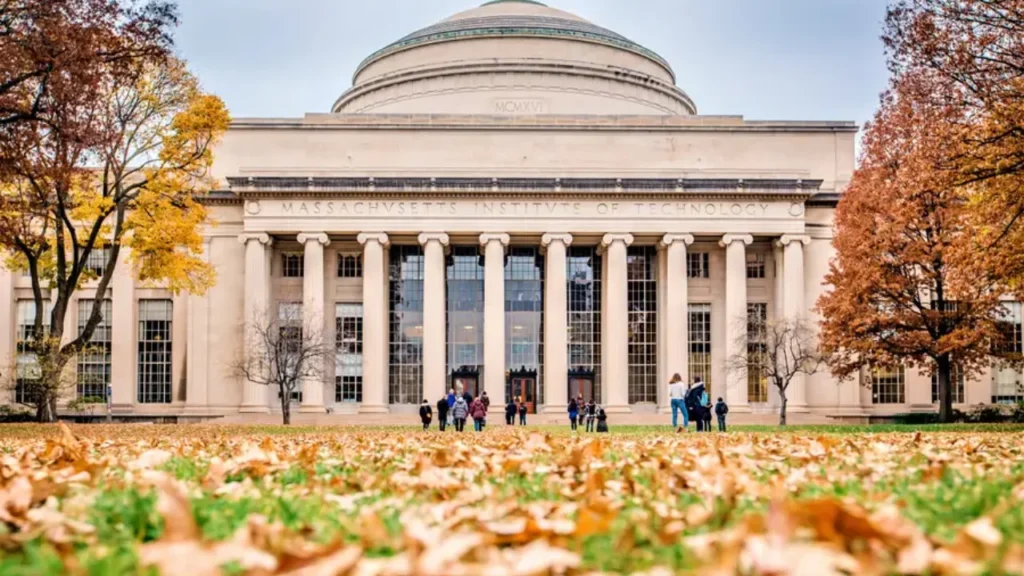
This university was established in 1861. It is one of the best universities to study master’s in USA, it ranks #1 in the QS World University Rankings 2025.
Here are more details about this university:
| Category | Details |
| Location | Cambridge, Massachusetts (a central part of the Boston/Cambridge tech and academic hub). |
| Top Master’s Programs | Engineering (Aeronautics, Mechanical, Civil/Environmental), Electrical Engineering and Computer Science (EECS), Materials Science, Media Arts and Sciences, and Sloan School of Management (Master of Finance, Master of Business Analytics, MBA). |
| Degree Types | Primarily grants the S.M. (Scientiae Magister or Master of Science), as well as MEng (Master of Engineering), MFin, MBA, and M.Arch. |
| Culture & Focus | MIT’s culture is one of intense rigour, hands-on learning, and aggressive innovation. The focus is heavily skewed toward STEM fields and interdisciplinary research. |
Tuition Fees
You might be thinking, How much does it cost to study a masters in USA?
- The average tuition fees for postgraduate programs are INR 37.27 lakhs to 1.17 Cr.
- The average tuition fee for MBA/PGDM programs is INR 37.27 lakhs to 1.14 Cr.
Stanford University
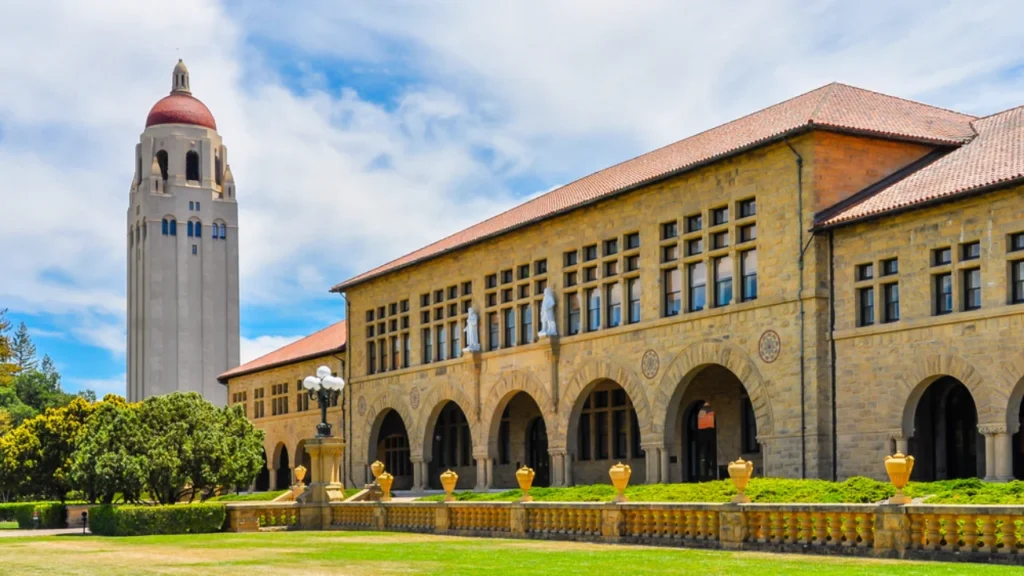
Stanford University is located in the San Francisco Bay Area on the ancestral land of the Muwekma Ohlone Tribe and first welcomed students in 1891.
This university ranks #3 in the QS World University Rankings 2025 with 13 undergraduate and postgraduate programs.
Here are more details about this university:
| Category | Details |
| Top Master’s Programs | Engineering and Technology, Life Sciences & Medicine, Natural Sciences, and Social Sciences & Management |
| Degree Types | M.S. (Master of Science), M.A. (Master of Arts), MFA, and professional degrees like MPP (Master of Public Policy). |
| Key Fact | Stanford’s Computer Science department is often cited as the origin of many successful tech companies, and its alumni network is exceptionally strong in the technology sector. |
Tuition Fees
You might be thinking, How much does it cost to study a masters in USA?
- The average tuition fees for postgraduate programs are INR 26.37 lakhs to 1.32 Cr.
- The average tuition fee for MBA/PGDM programs is INR 36.65 lakhs to 1.32 Cr.
Harvard University
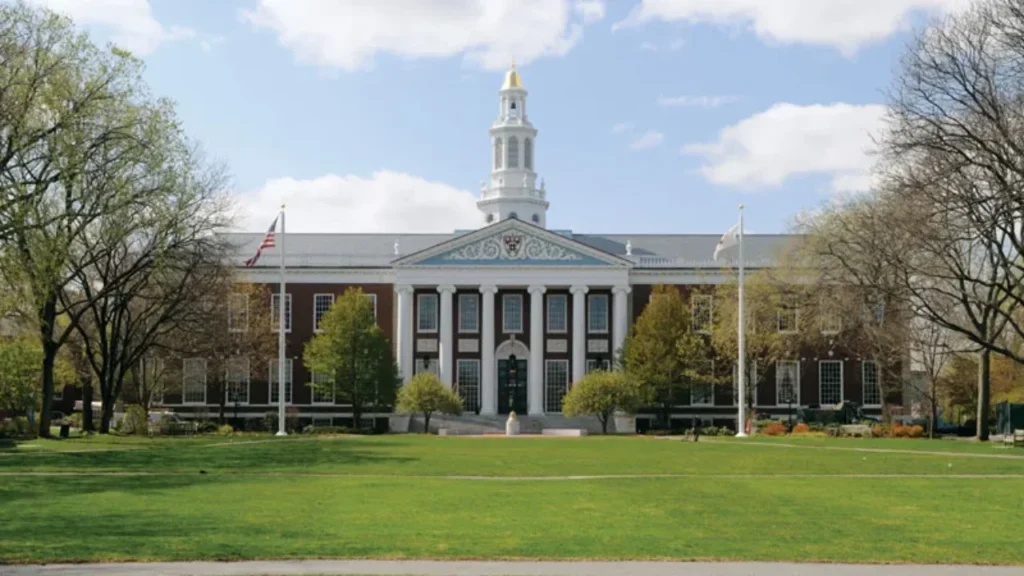
This university was established in 1836, and it is one of the oldest and top universities in the USA. Located in Cambridge, Massachusetts, three miles north-west of Boston,
This university ranks #5 in the QS World University Rankings 2025 with over 25 undergraduate and postgraduate programs.
| Category | Details |
| Top Master’s Programs | Harvard Business School (MBA), Kennedy School of Government (MPA/MPP), Law School (LLM), and Graduate School of Arts and Sciences (GSAS) for traditional academic Master’s in Humanities, Social Sciences, and Sciences. Also strong in Engineering and Applied Sciences. |
| Degree Types | M.S. (Master of Science), M.A. (Master of Arts), MFA, and professional degrees like MPP (Master of Public Policy). |
| Key Fact | While strong in all areas, Harvard is globally unparalleled for its strength in Public Policy, Law, and Business, shaping global leaders in non-STEM fields. Many of its academic Master’s programs are part of a PhD track. |
Tuition Fees
- The average tuition fee for PG programs is INR 17.64 Lakhs to 80.31 Lakhs.
- The average tuition fee for MBA/PGDM programs is around INR 11.74 lakhs to 24.84 lakhs.
University of California, Berkeley (UC Berkeley)

This is one of the best universities in the USA for International students, as it is a public research university, and it ranks #=17 in the QS World University Rankings 2025.
This university was established in 1868. Berkeley, a founding member of the Association of American Universities, hosts several world-renowned research centres, including the Mathematical Sciences Research Institute and the Space Sciences Laboratory.
This university offers one master’s program in Business and Management and four MBA programs-Executive MBA, Full-time MBA, Online-Distance MBA, and part-time MBA.
Here are some more details about the best university in the USA for Indian students:
| Category | Details |
| Top Master’s Programs | World-class in Engineering (particularly Civil & Environmental Engineering), Electrical Engineering and Computer Sciences (EECS), and Industrial Engineering & Operations Research. Also excels in Law (LLM) and the Haas School of Business (MBA). |
| Degree Types | M.S., M.A., M.Eng., M.Arch., MBA, LL.M., etc. |
| Key Fact | As a public university, it has a broader mission and often a larger student body than its private peers. It’s especially noted for its contributions to the free speech movement and cutting-edge AI/Machine Learning research. |
Tuition Fees
- The average tuition fee for PG programs is INR 22.42 Lakhs to 79 Lakhs.
- The average tuition fee for MBA/PGDM programs is around INR 14.7 lakhs to 19.56 lakhs.
Carnegie Mellon University (CMU)
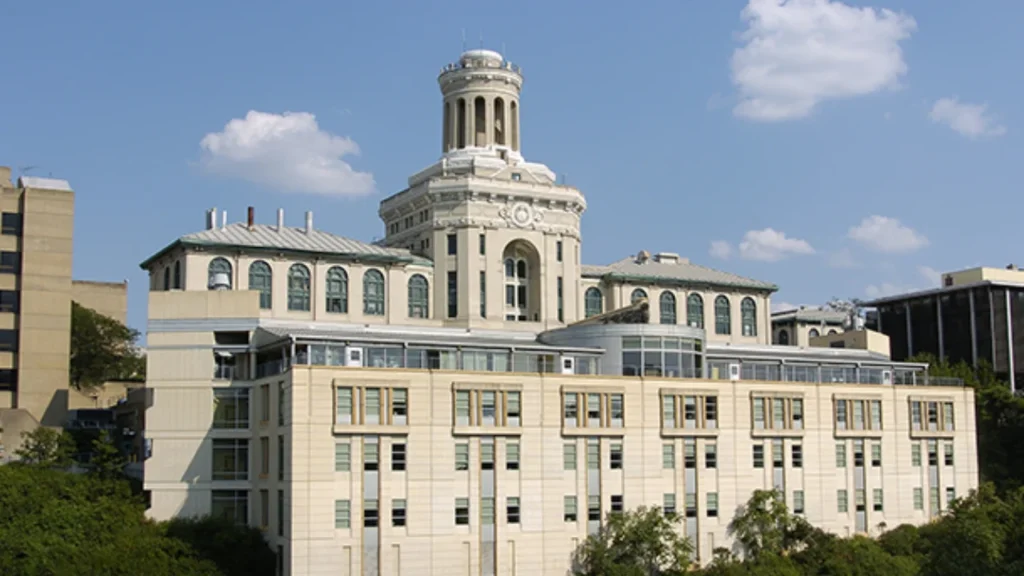
It is a private university that was established in 1900. In the 2026 edition of Best Colleges, Carnegie Mellon University is ranked #20 among National Universities and #4 among the Most Innovative Schools.
This university in the USA also ranks #52 in the QS World University Rankings 2025 with 4 undergraduate and postgraduate programs.
It provides top-ranked programs in various disciplines such as Engineering, Computer Science, Robotics, and Business, to the Public Policy, Fine Arts, Science, and Arts.
Here are some more details about this university:
| Category | Details |
| Top Master’s Programs | Computer Science (MSCS), M.S. in Machine Learning, M.S. in Artificial Intelligence (AI), Software Engineering, Robotics, and M.S. in Engineering (Electrical, Mechanical). Also highly ranked for its College of Fine Arts and Tepper School of Business. |
| Degree Types | M.S., M.S. in Software Engineering (MS in SE), MCDS (Master of Computational Data Science), and various specialised technical Master’s degrees. |
| Key Fact | CMU’s School of Computer Science (SCS) is often considered one of the most competitive and advanced in the world, pioneering fields like AI and Machine Learning. |
Tuition Fees
- The average tuition fee for PG programs is INR 9.37 Lakhs to 82.59 Lakhs.
- The average tuition fee for MBA/PGDM programs is around INR 22.63 Lakhs to 82.59 Lakhs.
Most In-Demand Master’s Courses in the USA
The most popular MS programs in the US are mainly in STEM and data-focused business fields, matching high industry demand.
STEM programs also offer a 36-month OPT, making them attractive for international students wanting work experience after graduation.
STEM-focused programs:
Computer Science (CS):
- Why: A versatile, evergreen choice covering Cloud Computing, Cybersecurity, and Software Development.
- Hot Specialisations: Cybersecurity, Robotics.
Artificial Intelligence / Machine Learning (AI/ML):
- Why: One of the highest-paying and fastest-growing fields, building intelligent systems and predictive models.
- Impact: Huge global demand for AI Engineers and Research Scientists.
Data Science (DS):
- Why: Focuses on analysing large datasets to provide insights for business decisions.
- Skills: Statistical modelling, Python/R, data visualisation.
Electrical Engineering (EE):
- Why: Critical in AI hardware, semiconductors, and green energy. Focuses on designing and optimising electronic systems.
Biomedical Engineering (BME):
- Why: Combines engineering with medicine and biology, driving innovation in medical devices, wearable tech, AI drug discovery, and genetics.
- Demand: Surged after recent global health developments.
Business-Focused MS Programs
These programs use quantitative and analytical skills to solve business problems, turning complex data into strategic decisions.
Business/Data Analytics (BA):
- What: Teaches students to analyse business data like market trends, customer behaviour, and operations to improve efficiency and drive revenue.
- Skills: Data mining, statistics, and business strategy.
- Demand: High demand in finance, e-commerce, and consulting for professionals who can turn data into actionable insights.
Finance (MSF):
- What: Prepares students for roles in investment banking, quantitative analysis, and risk management.
- Focus: Financial modelling, algorithmic trading, and market analysis.
Specialised MBA
- What: Concentrations like MBA in Business Analytics or FinTech blend technical expertise with leadership training.
Benefit: Great for fast-tracking into management roles.
Selecting the Right University
Choosing a university involves considering institution type, location, and program quality, beyond just overall reputation.
Public vs. Private Universities
Public Universities (State Schools):
- Funding & Tuition: Primarily state-funded. Lower tuition for in-state students; higher for out-of-state/international students, but often still below private school fees.
- Pros: Larger research facilities, diverse programs, and bigger, more diverse student bodies.
Private Universities:
- Funding & Tuition: Funded through tuition, endowments, and donations. Tuition is usually higher.
- Pros: Can offer generous financial aid, scholarships, and grants. Smaller class sizes allow more personalised attention and close faculty interaction.
Admission requirements to study a masters in USA
Eligibility requirements
Academic: Most US master’s programs require a 4-year Bachelor’s degree (16 years of education).
3-Year Bachelor’s Acceptance: Some universities accept a 3-year degree (common in India, the UK, Australia), but this depends on the program, the applicant’s grades/division, the institution’s accreditation, or completion of a bridge program. Always check individual departmental policies.
GPA:
- Typical requirement: 3.0/4.0.
- Top programs (e.g., CS, Engineering): Competitive applicants usually need 3.5/4.0 or higher.
- Universities also consider GPA trends, favouring applicants who improve academically in their final years.
Standardised Tests (Mandatory for most programs)
| Test | Typical requirements | Score Range for Top Programs | Note on Waivers |
| GRE (Graduate Record Examinations) | Generally required for STEM (Science, Technology, Engineering, Mathematics) and Liberal Arts/Humanities programs. | 320+ Total (Verbal + Quant), with a Quant score of 165+ being crucial for STEM. | Waivers are becoming increasingly common. Many top universities (including some programs at MIT, Stanford, and the UC system) have made the GRE optional or not required, particularly since the pandemic. Always verify for the specific program. |
| GMAT (Graduate Management Admission Test) | Required for Business-related programs like MBA, Master of Finance, and Master of Science in Business Analytics. | Typically, 680+ is competitive, with top schools often looking for 720+. | Waivers are frequently offered to applicants with significant professional work experience or a high undergraduate GPA. |
| TOEFL/IELTS (English Proficiency) | Required for international students from countries where English is not the primary language of instruction. | TOEFL iBT: 80–100 (Top-tier universities often require 100+). IELTS: 6.5–7.5 bands (Top-tier universities often require 7.0–7.5). | Can be waived if you have completed a prior degree from an institution where the language of instruction was English, or sometimes based on prior residency in an English-speaking country. |
Documents required to study Masters in USA
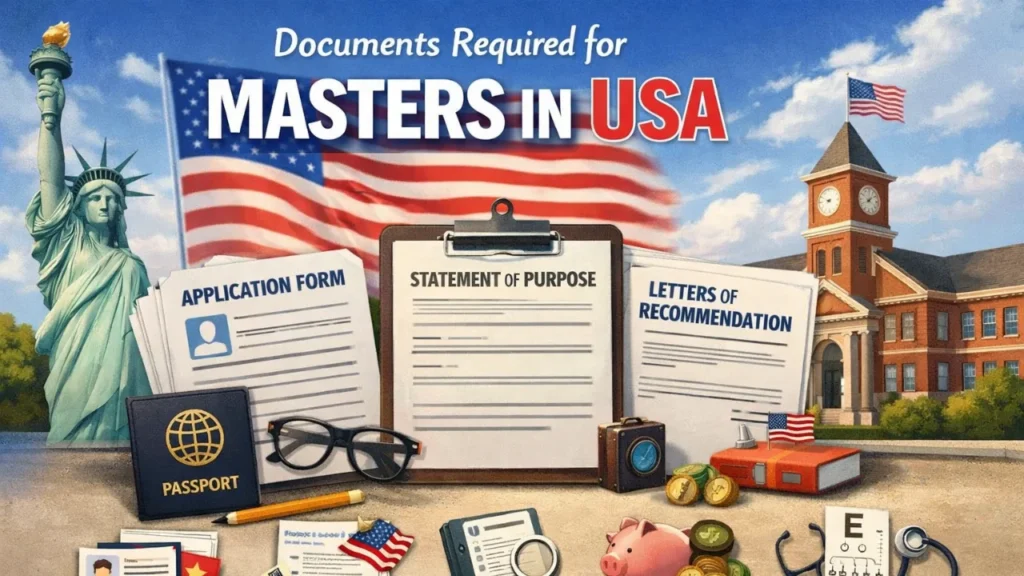
Statement of Purpose (SOP):
Your SOP is your most personal and influential essay. It should clearly explain:
- Why do you want to pursue this program?
- Why the university/department fits your goals (faculty, research, or curriculum).
- How has your background prepared you for advanced study?
fi - Your long-term career plans.
A strong, well-written SOP can even offset a slightly lower GPA or test score.
Letters of Recommendation (LORs):
Most programs require 2–3 LORs from professors or supervisors who know you well.
- What matters: Specific examples of your skills, achievements, and work ethic.
- Tip: Personalised and detailed letters are more valuable than generic ones.
- Type: Academic LORs are ideal for research-focused MS programs; a mix of academic and professional works best for career-oriented programs.
Academic Transcripts & Resume/CV:
- Transcripts: Official academic records from all institutions attended.
- Resume/CV: Summarise your education, projects, research, work experience, and extracurriculars in a clear, organised format.
The F-1 Study Visa for USA

The F-1 visa allows international students to study full-time at accredited U.S. colleges or universities.
Key Requirements
- Form I-20: Issued by your U.S. school after admission, this document confirms your acceptance, program details, and cost of attendance. It also includes your SEVIS ID.
- Proof of Funds: You must show reliable financial support to cover tuition and living expenses (usually for at least the first year). Provide bank statements, sponsor letters, or affidavits of support.
- SEVIS Fee (I-901): Pay this fee before scheduling your visa interview.
- Nonimmigrant Intent: You must prove that you plan to return to your home country after completing your studies. Demonstrate strong personal, professional, or family ties.
Tips for the Visa Interview
- Be Clear and Confident: Answer questions directly and honestly. Common ones include “Why this university?” and “What are your plans?”
- Show Research: Explain why your chosen program fits your academic and career goals — and how you’ll apply your degree back home.
- Demonstrate Financial Readiness: Be prepared to discuss your funding sources and show supporting documents.
- Dress Professionally: Choose neat, formal attire to create a positive impression.
Post-Study Work Opportunities
F-1 students can gain valuable work experience in their field of study during and after their academic program through OPT and CPT.
Optional Practical Training (OPT)
- What it is: Up to 12 months of work authorisation in a job directly related to your major. Most students use it after graduation (Post-Completion OPT).
- STEM Extension: Students with degrees in Science, Technology, Engineering, or Mathematics (STEM) can apply for a 24-month extension, giving a total of 36 months (3 years) of work eligibility.
- The employer must be E-Verify registered, and students must complete a training plan (Form I-983).
- The employer must be E-Verify registered, and students must complete a training plan (Form I-983).
Curricular Practical Training (CPT)
- What it is: Employment authorisation for internships or co-ops that are part of your program curriculum and directly related to your major.
- Duration: Approved per semester.
- Full-time CPT (12+ months) makes you ineligible for OPT.
- Part-time CPT (20 hours or less per week) does not affect OPT eligibility.
- Full-time CPT (12+ months) makes you ineligible for OPT.
Conclusion
Studying a master’s in the USA is a gateway to world-class education, top universities, and exciting post-study work opportunities, especially for Indian students.
By choosing the right course, preparing strong applications, and understanding the visa and OPT process, you can turn your dream into reality.
Take the first step today and set yourself on the path to a global career with a U.S. master’s degree!
Connect with our experts today!







One Response
Its like you read my mind! You seem to know so much about this, like you wrote the book in it or something. I think that you could do with some pics to drive the message home a bit, but instead of that, this is excellent blog. A fantastic read. I will definitely be back.